Are immersion experiences “life-changing”?
“Life changing” is the phrase often used about immersion trips. Thousands of Americans – some estimate 1.6 million college students annually – participate in immersion experiences and mission trips each year. But in fact for most college students, it’s unclear what changes they make in their lives, still less how their experience helps to improve the lives of the people they visit. What happens when North Americans return from countries like Guatemala? Are they more informed about the root causes of the migration crisis at our southern border? Do they take action to improve conditions in Guatemala so that indigenous people are not compelled to migrate because of violence, poverty, or hunger? Students at Cabrini University have found one way to address the issues they see in Guatemala. Since 2009, upon return, they speak about the root causes of poverty in Central America with their elected representatives. They use their power as U.S. citizens to advocate for long-term development assistance to improve conditions in Central America.
Lobbying to address root-causes of poverty
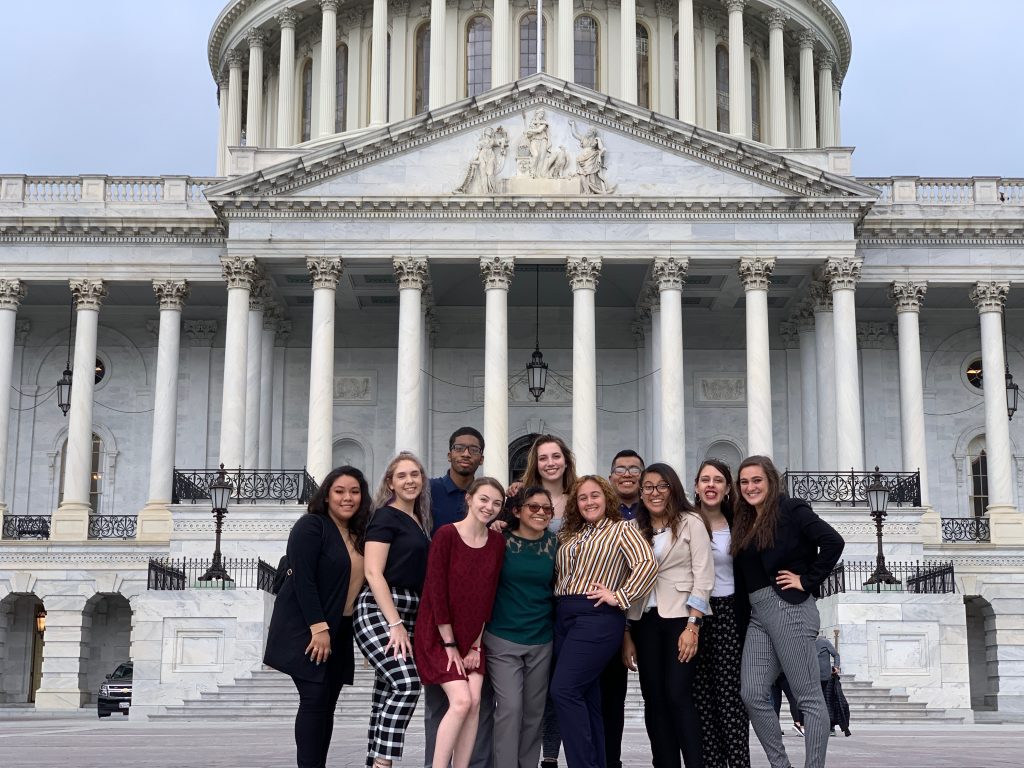
The picture above is of a group from Cabrini University who went on an immersion trip to San Lucas Tolimán, Guatemala, and then returned to advocate with their legislators about continuing aid to Central America. They met with congressional aides to their senators and representatives in order to address the root causes of poverty that they experienced there. While in Guatemala they saw the need to counter the effects of climate change, expand youth training for productive jobs, improve maternal and child health care and nutrition especially in the first thousand days of life.
In lobbying, the students draw upon the resources of Catholic Relief Services, the official international development agency of U.S. Catholics, and present the conditions they have seen first hand in San Lucas in order to give their views in person in the U.S. Capitol. Few Congresspersons and their aides have had the opportunity to work alongside people in poor communities like the remarkable people of San Lucas Tolimán and to develop long-term relationships.
These Cabrini students can bring their experience and stories to Congress and explain how long-term foreign aid can make a difference that allows a community to work its way out of poverty.
The students explain how the San Lucas community has grown the Juan Ana coffee business. The students tell the story of how the community coffee business started with early help from Father Greg Schaffer‘s family but how it is now winning national awards for quality. The students relate how the Women’s Center is training many women to become entrepreneurs, how many young people are learning skills in the building trades, and how the parish school has sent students on to become valuable educators, healthcare practitioners, accountants, and others. The point the students make is that the community, with some outside support, over time is thriving in many ways.
The impact
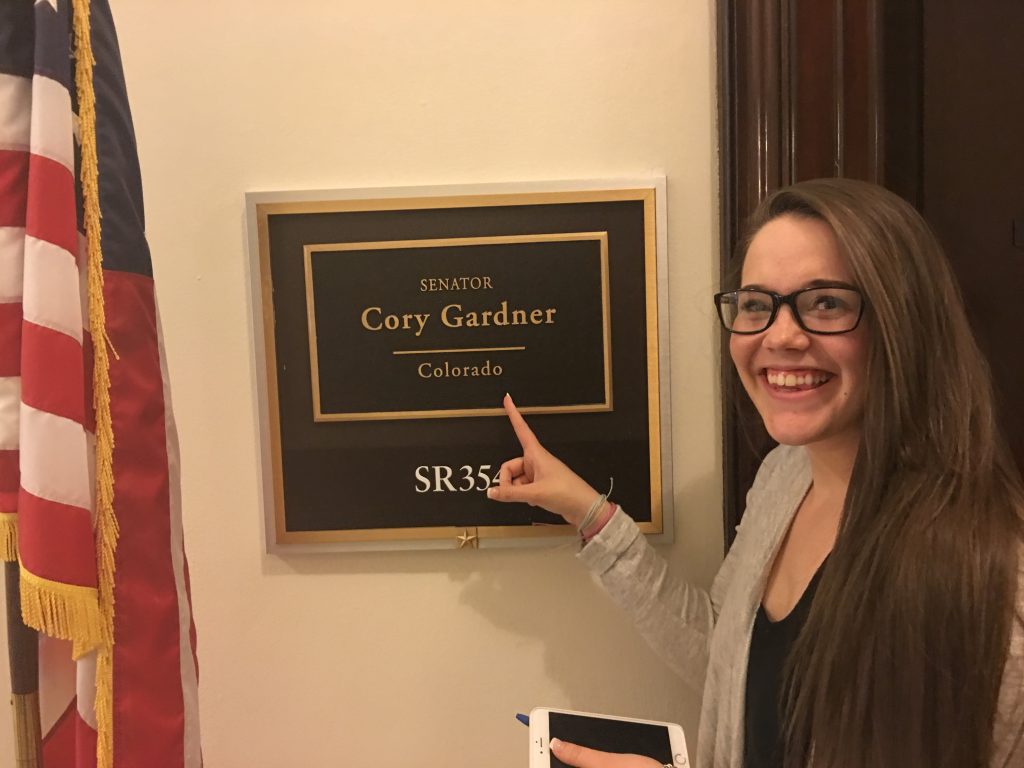
Since 2009, 11 classes, totaling approximately 150 students, have made about 450 presentations to the foreign affairs aides of their Senators and Representatives in Washington. At the present time, as our country is focused on migration from Central America, the students keep making the case that focusing on the root causes that drive people to leave their homes is a more effective means of addressing the crisis. In the past few years, the current administration has proposed to cut the budget for foreign aid by more than 30 percent and denies the effects of climate change in Central America. These students counter those claims with their own first-hand experience in San Lucas. Each year, Congress has rejected the administration’s foreign aid budget proposal. Students leave the offices and say: “Our voice matters.”
Background
Cabrini’s immersion experience is part of a 3-credit academic course on global justice. The trip occurs in the middle of a semester-long course. In the 6 weeks prior, students learn about the history and culture of Guatemala, US military involvement, the civil war, the growth of the San Lucas Tolimán mission and Fr. Greg’s vision, current successes and challenges. During the trip, the students reflect each night on what they have learned through the lens of Christian Social Teaching. In the 6 weeks after the trip, they learn the issues and legislation they will be supporting in their congressional visits. At the end of the course, they travel to D.C. to speak with their representatives’ foreign policy aides.
- See also https://archive.ph/mSDMc

One reply on “Guatemala immersion experience doesn’t stop at the airport”
[…] Question: After your students returned from San Lucas, they selected an issue that was important to them related to their trip (such as climate change, maternal and child health, or migration, for example) and met with their representatives in DC to address the issue. Why was this an important or formative part of the trips you’ve led to San Lucas? Dr. Zurek: Another challenge is teaching that the hard work of the visit does not happen in San Lucas but after we return. We have just had the privilege of being hosted by a remarkable community. However, if the relationship is to be reciprocal, what are we going to do back home? How can we break stereotypes and educate others about the strengths and assets of the community? How can we educate others about the true relationship of the US and Guatemala over the decades? About the way rich nations affect the climate of Central America? About how trade policies have affected Central America over the decades? About the true long-term causes of northward migration? We North Americans are so poorly educated, and our students’ visits can be a motivation for them to continue to educate themselves, their family and friends, and even their members of Congress. Yes, for 15 years, Cabrini students have met congressional staff to discuss more positive US policies toward Central America with regard to climate, migration, food and nutrition, etc. We try to get our members of Congress to focus on long-term solutions to issues through improving our aid, trade, and development policies. So often Americans merely look at short-term political fixes because they don’t understand the long-term causes. To learn more about the lobbying efforts of Cabrini students, click here. […]